Your First Fine-Line Tattoo: Everything You Need to Know
Getting your first tattoo naturally comes with questions — especially when it comes to fine-line tattoos, a delicate and increasingly popular style for those looking for something small, elegant and refined. This guide will walk you through everything that matters before you take the step.
What Is a Fine-Line Tattoo?
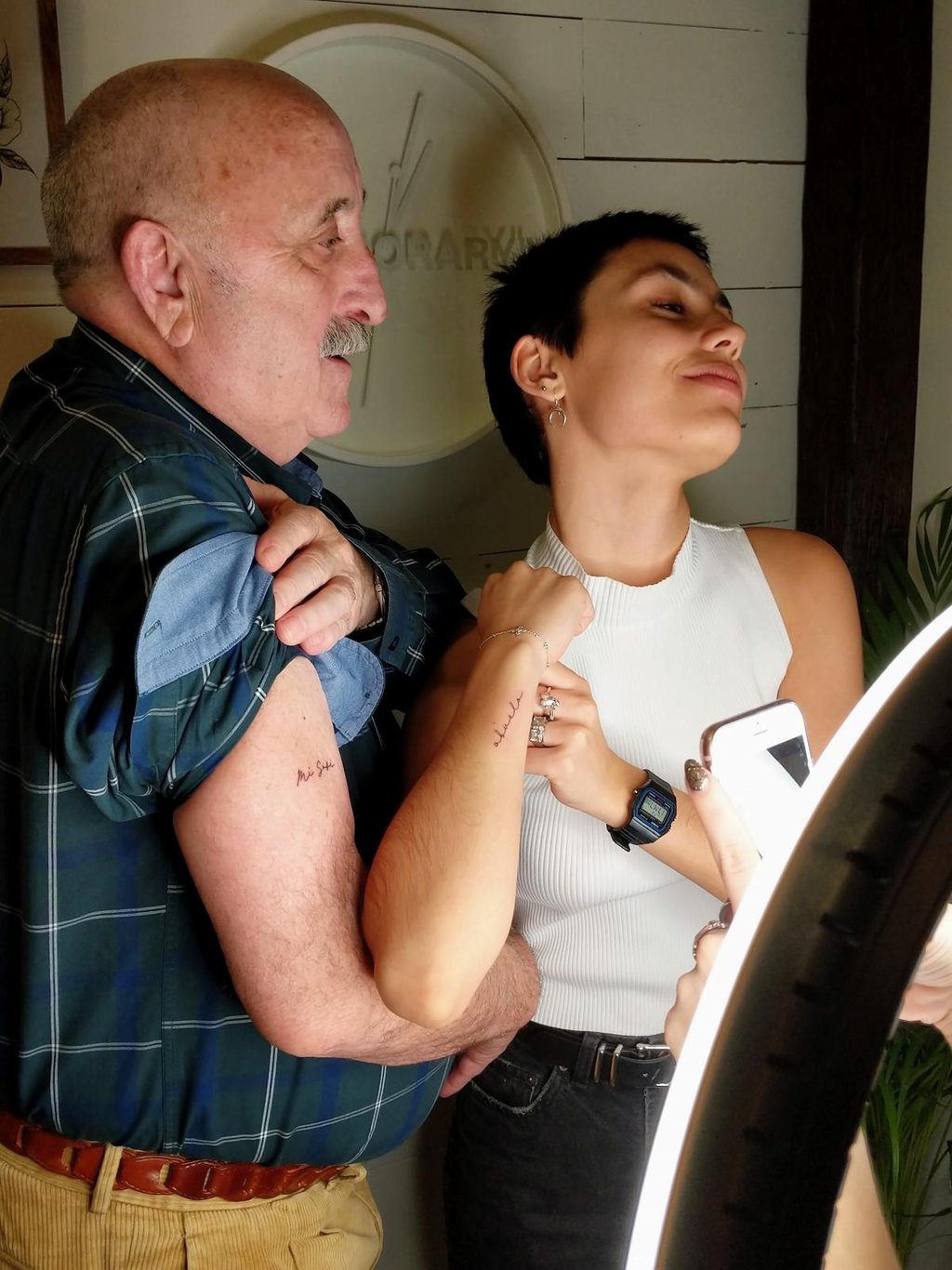
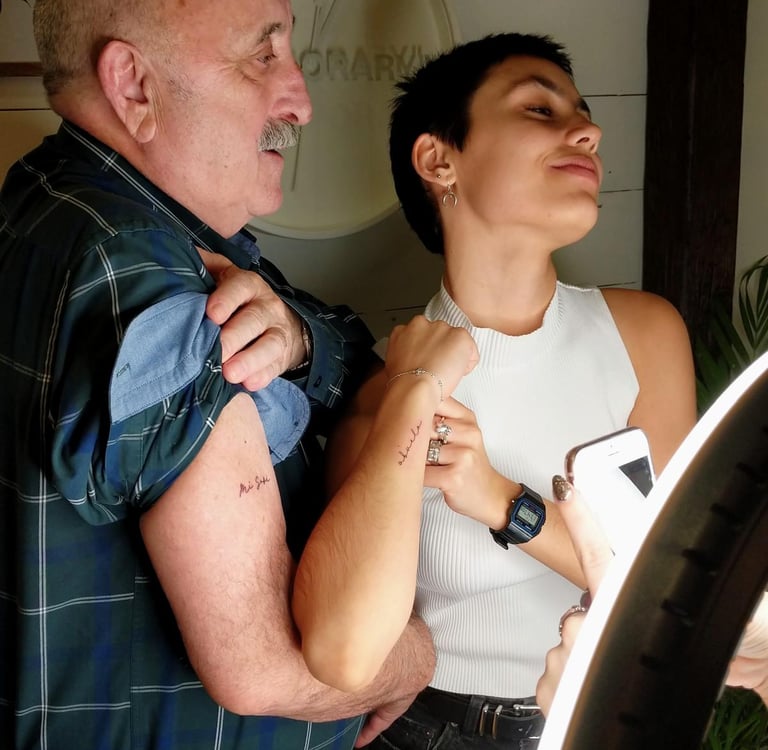
Fine-line tattoos are one of the most delicate styles in tattooing. They use very fine needles to create subtle, clean and minimalist results. This makes the style especially well-suited for:
- Words or short phrases
- Small symbols
- Minimalist illustrations
- Discreet, understated designs
In some cases, the single needle technique is used — tattooing with just one needle. That said, not every fine-line tattoo requires it. What matters is a clean, precise and well-defined result.
Common Questions Before Your First Tattoo
If you're considering your first tattoo, it's completely normal to wonder:
- How much does it hurt?
- Which part of the body should I choose?
- How long will a fine-line tattoo last?
- What if I regret it someday?
Most of these questions are easily answered in a conversation with your artist before the appointment. Every person is different, every skin reacts differently, and every design may call for specific guidance. Tattooing is a guided process — the studio is there to help you make the right decisions.
How to Choose Your Tattoo Design
Two simple questions can help clarify most decisions when getting your first tattoo. Do you want it to be visible, or something more discreet? This mainly helps you decide on placement. Some people prefer visible spots like the forearm or wrist, while others prefer something more private. Does it need to mean something, or are you drawn to the aesthetic? Some people want a tattoo that represents something personal. Others simply want a design they love visually. Both are equally valid. Keep in mind that meaning doesn't always have to be literal. A small star or a simple geometric shape can hold deep personal significance. If you have an abstract idea but aren't sure how to translate it visually, your artist can help you get there. The opposite also happens — sometimes someone knows the placement but not the design, or has a design in mind but isn't sure where it would work best. In either case, the studio can guide you.
Best Placements for Fine-Line Tattoos
Placement is an important decision. Fine-line tattoos work well in most areas of the body, but some locations tend to wear faster due to skin type or constant friction. Placements where ink may fade more quickly:
- Palms of the hands
- Fingers
- Feet
- Inner lip
In these areas, skin regenerates faster or behaves differently, which can cause the ink to break down sooner — sometimes losing intensity within days. Other areas such as behind the ear can also experience some ink loss over time, though results vary depending on individual skin. For more stable, long-lasting results, areas like the forearm, upper arm, collarbone and ankle tend to work particularly well for fine-line work.
How Long Does a Fine-Line Tattoo Last?
This question can mean two different things — how long it takes to do, and how long it stays on the skin. How long does it take? Fine-line tattoos are generally quick to execute, especially for smaller designs: - A single small letter: around 5 minutes - A simple word: approximately 15 minutes Exact timing depends on the design, placement and your skin. How long does it last on the skin? A tattoo is designed to last a lifetime. That said, like any tattoo, subtle changes can occur over the years — skin is a living organ, and fine lines may widen slightly with time. This is exactly why precision and quality of execution matter from the start.
What If You Regret It?
Fear of regret is one of the most common concerns before a first tattoo — and in our experience, it happens far less often than people expect. Most clients who start with something personally meaningful — connected to family, a moment in life, or something close to them — rarely want it removed. What does happen more frequently is people wanting to remove older tattoos that were poorly executed or too bold in style. In any case, modern laser technology makes removal or fading possible if you ever decide to go that route.
What Happens on the Day of Your Session
The process on the day is straightforward and calm. First, your design is reviewed together to confirm every detail is right. The design is then printed in different sizes to find the best fit. A stencil is applied to your skin — this acts as a precise guide for the tattoo. The stencil lets you see exactly how the tattoo will look before anything begins. If you'd like to adjust the position or size, that's the moment to do it.
How a Fine-Line Tattoo Heals
A small fine-line tattoo typically heals fully in around three weeks. During this time, the skin regenerates and the tattoo settles into place. Your artist will walk you through the exact aftercare steps at the studio — there's nothing complicated about it, and you won't be left to figure it out alone.
Frequently Asked Questions
Does a fine-line tattoo hurt?
Based on what most of our clients tell us, the sensation is quite mild. Many describe it as a light scraping feeling — very superficial and nothing like what people typically imagine. In fact, many clients who arrive nervous about pain leave saying it was far easier than expected. On a scale of 1 to 10, most rate it around a 2.
What is the best placement for a first tattoo?
It depends on the person. If you're unsure about visibility, many people prefer to start somewhere more discreet — such as: - Along the bra line - The ankle - The outer elbow These spots allow you to start small without it always being on display. It's also worth knowing that most people adjust to their tattoo very quickly — within a short time, many barely notice it's there.
One Final Thought
Getting your first tattoo can feel like a significant decision — but with the right information and guidance, it's almost always a positive experience. The most important thing is choosing a studio where you feel comfortable and supported throughout the process. At Sinkply, we work exclusively with fine-line tattoos and have guided many clients through their very first session. If you have questions or simply want to share an idea, we're always happy to hear from you.